Wolpe wondered how many young people today even know Saul Bellow or read his work, but mused how wonderful it would be if more children of famous authors wrote about their parents, as Greg Bellow has.
ellauri222.html on line 117: “I am an American, Chicago born” begins the famous first sentence of “The Adventures of Augie March.” The author of that sentence was actually an illegal immigrant, Canada born, and the words were written in Paris. Bellow’s father, Abraham Belo, was born in a shtetl inside the Pale of Settlement. He began his career in St. Petersburg as a produce broker, specializing in Egyptian onions and Spanish fruit. The family seems to have been quite well off. Abraham had used a forged document to work in St. Petersburg, and, when this was discovered, he was arrested and convicted. He may have gone to prison. But he managed to escape and, in 1913, to get his family to Canada.
ellauri222.html on line 189: Bellow must have been tickled to death. The inventive feature of “Herzog” is a series of letters that the protagonist, in his misery, composes not only to Madeleine and Gersbach but to famous people (like President Eisenhower) and philosophers (like Heidegger and Nietzsche). These long letters, unfinished and unmailed, are sendups of an intellectual’s effort to understand human behavior by means of the conceptual apparatus of Mortimer Adler’s Great Books. Herzog is a comic figure, a holy fool, a schlimazel with a Ph.D. The whole point of his story is that when you are completely screwed the best you can hope for is a little sex and sympathy. The Western canon isn’t going to be much help.
ellauri222.html on line 209: The decorum in Bellow criticism is to acknowledge the original of the fictional character when the person is famous, and otherwise to insist on treating it all as fiction. Thus everyone knows that, in “Humboldt’s Gift,” Von Humboldt Fleisher “is” Delmore Schwartz, and that, in “Ravelstein,” Abe Ravelstein “is” Allan Bloom, the Chicago professor who wrote “The Closing of the American Mind” and was a good friend of Bellow’s.
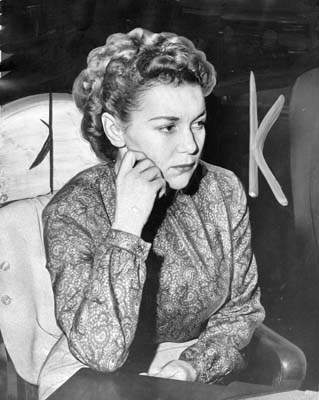
ellauri222.html on line 243: Greg's mother was Anita Goshkin, Saul's first wife, whose family had emigrated to the US from the Crimea after the pogroms, as Bellow's own antecedents had left Lithuania for Canada. They ended up in Chicago, where Saul would become one of the city's most famous sons and where, in 1935, he met Anita at summer school. Anita oli niin tavis ettei siitä ole edes nettikuvia. Tollanen Liisa Karhunen.
ellauri222.html on line 247: Greg makes a distinction between "young Saul", the Marxist and rebel, and "old Saul", the famous author and increasing reactionary. Old Saul was "buried under pessimism, anger, bitterness, intolerance and preoccupations with evil and with his death".
ellauri222.html on line 886: Ozymandias (/ˌɒziˈmændiəs/ oz-ee-MAN-dee-əs; real name Adrian Alexander Veidt) is a fictional anti-villain in the graphic novel limited series Watchmen, published by DC Comics. Created by Alan Moore and Dave Gibbons, named "Ozymandias" in the manner of Ramesses II, his name recalls the famous poem by Percy Bysshe Shelley, which takes as its theme the fleeting nature of empire and is excerpted as the epigraph of one of the chapters of Watchmen. Ozymandias is ranked number 25 on Wizard's Top 200 Comic Book Characters list and number 21 on IGN's Top 100 Villains list. No, wait, Ozymandias was a Greek name for the pharaoh Ramesses II (r. 1279–1213 BC), derived from a part of his throne name, Usermaatre. In 1817, Shelley began writing the poem "Ozymandias", after the British Museum acquired the Younger Memnon, a head-and-torso fragment of a statue of Ramesses II, which dated from the 13th century BC. Earlier, in 1816, the Italian archeologist Giovanni Battista Belzoni had "removed" the 7.25-short-ton (6.58 t; 6,580 kg) statue fragment from the Ramesseum, the mortuary temple of Ramesses II at Thebes, Egypt. The reputation of the statue fragment preceded its arrival to Western Europe; after his Egyptian expedition in 1798, Napoleon Bonaparte had failed to acquire the Younger Memnon for France. Although the British Museum expected delivery of the antiquity in 1818, the Younger Memnon did not arrive in London until 1821. Shelley published his poems before the statue fragment of Ozymandias arrived in Britain, and the view of modern scholarship is that Shelley never saw the statue, although he might have learned about it from news reports, as it was well known even in its previous location near Luxor.
ellauri222.html on line 1080: Sir Walter Raleigh was one of the most famous explorers of Elizabeth I's reign. His courage and good looks made him a favourite of the Queen's, and she rewarded him for his handsomeness. Raleigh was also a scholar and a poet, but he is usually remembered for introducing the essential potato, and the addictive tobacco.
ellauri223.html on line 135: Through Augustine, this doctrine influenced much of Catholic thought on the subject of evil. For instance, Boethius famously proved, in Book III of his Consolation of Philosophy, that “evil is nothing”.The theologian Pseudo-Dionysius the Areopagite also states that all being is good, in Chapter 4 of his work The Divine Names. Thomas Aquinas concluded, in article 1 of question 5 of the First Part of his Summa Theologiae, that “goodness and being are really the same, and differ only in idea”.
ellauri236.html on line 405: “Are you sure it’s safe to use?” “Yeah. It can stay up all night.” She settled down in the bed. “Can it?” She spoke so softly he scarcely heard what she said, but he did hear. He suddenly grinned. “Well, there’s no law against it, is there? Do you want me to stay?” “Now you’re making me wet,” the girl said and hid her face. “What a question to ask a lady.” "My spaghetti’s going to be world famous in a moment. I promise.”
ellauri240.html on line 207: After graduation George was offered a position as a principal at a school in Gilmanton, New Hampshire. By now the family had three children, all dependent upon his meager salary. It was while she was living in Gilmanton that Julian Messner, a New York publisher, agreed to publish Peyton Place. The book was a best seller by the fall of 1956, and Metalious became a wealthy woman overnight. Eventually, 20 million copies were sold in hardcover, along with another 12 million Dell paperbacks. Metalious became famous as the housewife who wrote a bestseller; she was referred to as "Pandora in Blue Jeans," the simple small-town woman who opened the box of sins.
ellauri243.html on line 705: The television show " Rowan & Martin's Laugh-I n," popular in the late 1960's and early 1970's, was famous for awarding its goofy trophy, the Flying Fickle Finger of Fate. But the term fickle finger of fate is actually decades older than that. The unpredictable and capricious nature of chance or fate, an Americanism popular in college circles during the 1930s. Sometimes the alliteration is extended coarsely to 'fucked by the fickle finger of fate' an expression which became popular in the US military during World War II.
ellauri244.html on line 632: famouspeople.com/profiles/images/anais-nin-6.jpg" height="150px" />
ellauri245.html on line 636: famouspeople.com/profiles/images/leopold-ii-of-belgium-1.jpg" height="190+x" />
ellauri247.html on line 277: Dover. Smollett finds a good deal to be said for the designation of "a den of thieves" as applied to that famous port (where, as a German lady of much later date once complained, they "boot ze Bible in ze bedroom, but ze devil in ze bill"), and he grizzles lamentably over the seven guineas, apart from extras, which he had to pay for transport in a Folkestone cutter to Boulogne Mouth.
ellauri247.html on line 337: With the widow's money, Johnson opened Edial Hall School as a private academy at Edial, near Lichfield. He had only three pupils: Lawrence Offley, George Garrick, and the 18-year-old David Garrick, who later became one of the most famous actors of his day. The venture was unsuccessful and cost Tetty a substantial portion of her fortune. Instead of trying to keep the failing school going, Johnson began to write his first major work, the historical tragedy Irene. Biographer Robert DeMaria believed that Tourette syndrome likely made public occupations like schoolmaster or tutor almost impossible for Johnson. This may have led Johnson to "the invisible occupation of authorship".
ellauri247.html on line 388: Tweedle Dee & Tweedle Dum" is the opening song on Bob Dylan's 2001 album Love and Theft. Bob is famous for tweedling his dums and quite particularly his "D." Mom said don't but he did. (Tweedle twē′dl, v.t. to handle lightly: ( obs.) to wheedle.— v.i. to wriggle.)
ellauri254.html on line 383: This pessimistic Russian symbolist writer, who referred to himself as the lard of death, was (as I already said) the first writer to introduce the morbid, pessimistic elements characteristic of fin de siècle literature and philosophy into Russian prose. His most famous novel, The Petty Cash Demon (1905), was an attempt to create a living portrait of the concept known in Russian as poshlost' (an idea whose meaning lies somewhere between evil, trashy and banality or kitsch). His next large prose work, A Created Legend (a trilogy consisting of Drops of Blood, Queen Ortruda, and Smoke and Ash), contained many of the same characteristics but presented a considerably more positive and hopeful view of the world. It sold much worse than Petty Cash.
ellauri254.html on line 829: Zamyatin is now considered one of the first Soviet dissidents. He is most famous for his highly influential and widely imitated 1921 dystopian science fiction novel We, which is set in a futuristic police state.
ellauri256.html on line 251: Boris Bugaev was born in Moscow, into a prominent intellectual family. His father, Nikolai Bugaev, was a noted mathematician who is regarded as a founder of the Moscow school of mathematics. His mother, Aleksandra Dmitrievna (née Egorova), was not only highly intelligent but a famous society beauty, and the focus of considerable gossip. She was also a pianist, providing Bugaev his musical education at a young age.
ellauri256.html on line 382: Professionally, Brik was everything and nothing: she tried to be a sculptor, a writer, a film actress, she worked in advertising and took balling lessons. She did not achieve great results in any of these fields. Yet, she founded one of Moscow's most famous literary salons of the 20th century. That salon outlived all others. “The literature was canceled, there was just the Briks' salon left, where writers met with KGB operatives,” Anna Akhmatova, who was not invited to the salon, jealously said.
ellauri262.html on line 88:
ellauri262.html on line 513: Lewis then says that he doesn’t believe in the doctrine of Total Depravity on logical and experiential grounds. Also, shame is of value, not as an emotion but for the insight that it provides. He shares how he notices that the more a man hollers the more fully aware he is of his vileness. To underline this point Clive says probably the most famous line from this book: "God whispers to us in our pleasures, speaks in our conscience, but shouts in our pain: it is His megaphone to rouse the deaf."
ellauri262.html on line 625: During his life C.S. Lewis was clear that the famous lion, who appears in all seven Narnia books, was based on Christ.
ellauri264.html on line 209: To make a long story short-- Victor Lebow was a prophet. He has been slandered by all who have used this infamous quote to paint him as a cheerleader for consumerism when in fact he was one of the first-- if not the first-- to see the future implications of its corrosive influence. The fact that so many people, organizations, and websites have used his quote completely out of context and nearly all got the quote from the SAME source should give people GREAT pause-- and should be an object lesson in scholarship for progressive people. Don't believe everything you read. And don't write articles or create websites using materials you haven't primary sourced, either.
ellauri264.html on line 597: Nineteen years ago, on that famous night, when the decision of the establishment of the State of Israel was made by the governors of the nations of the world, when all the people flocked to the streets to publicly celebrate, I could not take part in the joy. In those first hours I could not make peace with what was done, with the horrible news, that God´s words from the prophecy in the Twelve Prophets: "My land was divided" was coming true. Where is our Hebron? Are we forgetting it? And where is our Nablus? Are we forgetting it? And where is our Jericho? Are we forgetting it? And where is our east side of the Jordan? Where is every lump and chunk? Every bit and piece of the four cubits of God´s land? Is it up to us to give up any millimeter of it? God forbid! In the state of shock that took over my body, completely bruised and torn to pieces – I could not rejoice then.
ellauri266.html on line 335: Good communication is the key to good sexuality. How is it attained? Well television is a wonderful invenmtion, bringing the whole amazing world to our living room. Only you can´t interact with it (you can interact with yourself while watching, but it ain´t the same). A mobile phone is already way better, but clearly the best solution is an AI silicone playmate. One of the fascinating things that Eric Berne says in his famous book, Games People Play, is that we have 3 ego states, id, ego, and superego. Oops my bad, that was my esteemed colleague Freud a few decades earlier. But anyway.
ellauri271.html on line 130: Ken on tuo apina jota tuolla kuopataan? Se on Vedenjapina, Marija, Jyrkin äisky. Minkä ikäisenä kuoli äiti Borjalta? The family claimed descent on the paternal line from Isaac Abarbanel, the famous 15th-century Sephardic Jewish philosopher, Bible commentator, and treasurer of Portugal. Ei ilmeisesti poikasena. Taivaanrannan maalari-isä hipsi pakoon komukoita Berliiniin 1921 ja nazeja Lontooseen 1938. Heippalander perheelle.
ellauri275.html on line 458:
ellauri277.html on line 232: In November 1902 Gibran wrote to Peabody, and she invited him to a party held at her house two weeks later. An intense platonic relationship resulted, though Gibran seems to have wanted it to progress to a sexual one. He visited her regularly; they went to musical and artistic events together; they wrote to each other often; and she encouraged his writing and his art. She gave him the nickname that he later used as the title of his most famous book: “the Prophet.” In October 1903 Gibran wrote something in a letter to Peabody that angered her, and their relationship cooled.
ellauri278.html on line 194: In 1904, Chicherin inherited the estate of his famous uncle in Tambov Governorate and became very wealthy. He immediately used his new fortune to support revolutionary activities in the runup to the Russian Revolution of 1905 and was forced to flee abroad to avoid arrest late in that year. He spent the next 13 years in London, Paris and Berlin, where he joined the Menshevik faction of the Russian Social Democratic Labor Party and was active in emigre politics. In Imperial Germany, he underwent medical treatment in attempts to cure his homosexuality.
ellauri281.html on line 193: In 1904, Chicherin inherited the estate of his famous uncle in Tambov Governorate and became very wealthy. He immediately used his new fortune to support revolutionary activities in the runup to the Russian Revolution of 1905 and was forced to flee abroad to avoid arrest late in that year. He spent the next 13 years in London, Paris and Berlin, where he joined the Menshevik faction of the Russian Social Democratic Labor Party and was active in emigre politics. In Imperial Germany, he underwent medical treatment in attempts to cure his homosexuality.
ellauri282.html on line 101: [3.4. klo 19.14] Oma Profiili: The famous Allan Ramsay portrait of David Hume, hanging in the University of Edinburgh, depicts him wearing a remarkable hat: a unique salmon-coloured turban. I was able to see the original on the occasion of receiving an honorary degree from Edinburgh in 2007, and ever since then I have desired to obtain a replica of that curious hat for myself (to wear on special occasions, such as those requiring academic regalia).
ellauri282.html on line 639: famouspoetsandpoems.com/poets/john_masefield/poems/15268.html">The Everlasting Mercy on runo John Masefieldiltä, Ison-Britannian toiseksi pisimpään toimineelta runoilijavoittajalta. Se julkaistiin vuonna 1911, ja sen tyyli on synnistä kristinuskoon kääntyneen miehen tunnustus. Teos, joka teki Masefieldin ensimmäisenä tunnetuksi, järkytti 1900-luvun alun brittiläisiä tunteita suoralla, rehellisellä ja siksi usein ankaralla kielenkäytöllä, kun päähenkilön väkivaltaisen, juopuneen naispuolisen eipäskuin naistenmiehen Saul Kanen elämää on kuvattu yksityiskohtaisesti. Viisu on halpahintaista melodraamaa, Netflix-tasoa.
ellauri285.html on line 347: Mary Robinson (née Darby; 27 November 1757 – 26 December 1800) was an English actress, poet, dramatist, novelist, and celebrity figure. She lived in England, in the cities of Bristol and London; she also lived in France and Germany for a time. She enjoyed poetry from the age of seven and started working, first as a teacher and then as actress, from the age of fourteen. She wrote many plays, poems and novels. She was a celebrity, gossiped about in newspapers, famous for her acting and writing. During her lifetime she was known as "the English Sappho". She earned her nickname "Perdita" for her role as Perdita (heroine of Shakespeare's The Winter's Tale) in 1779. She was the first public mistress of King George IV while he was still Prince of Wales.
ellauri310.html on line 605: Richard Volney Chase (1914-1962) was a literary critic and a Professor of English at Columbia University. He is known for his work The American Novel and Its Tradition. Way famouser is Richard Trenton Chase (May 23, 1950 – December 26, 1980) an American serial killer, cannibal, and necrophile who killed six people in the span of a month in 1977 and 1978 in Sacramento, California. He was nicknamed The Vampire of Sacramento because he drank his victims' blood and cannibalized their remains.
ellauri321.html on line 60: Sam Weller is a fictional character in The Pickwick Papers (1836), the first novel by Charles Dickens, and the character that made Dickens famous. Читать ещё
ellauri331.html on line 36: “Wladimir is a bisexual. Wladimir swings both ways,” Fury said of Klitschko, who is engaged and has a daughter with actress Hayden Panettiere, according to The Sun. “For those that don’t know that, I can confirm it now.” Fury, a devout Christian, has become infamous for habitual verbal attacks on women, Jews and gays.
ellauri336.html on line 604: That’s the first thing that makes Thunberg’s statement so disgusting. It’s truly mind-boggling that an internationally famous figure could comment on this conflict, which was escalated to its current fever pitch by Hamas’s brutal terrorist attack, without even mentioning that attack or offering any support to its victims.
ellauri347.html on line 169: Woody Allenin Zelig oli schlemiel. Zelig sai kaksi Oscar-, kaksi Golden Globe- ja viisi Bafta-palkintoehdokkuutta muttei yhtään voittoa. Fichte, the famous German thinker’s, solution was not merely ban or burn books but to cut off their heads on the same night in order to replace them with those containing no Jewish ideas.
ellauri350.html on line 155: Johnista tuli kuulu pragmaatikko, vaikka köyhä. He is one of the successful Philosophers. He has ranked on the list of those famous people who were born on October 20, 1859. He is one of the Richest Philosophers who were born in VT. He also has a position among the list of Most popular Philosophers. But his net worth is estimated only at $1-5M, the lowest quote among celebrities. He died on Jun 1, 1952 (age 92). Birth sign Libra.
ellauri350.html on line 278:
ellauri351.html on line 470: famousbirthdays.com/faces/girard-rene-image.jpg" height="300px" />
ellauri360.html on line 480: It is easy to understand scholars slightly overemphasizing when they claim that the global expansion is actually the Pentecostal expansion. Missionaries are frequently criticized as serving both Christ and commerce. They are pictured as agents of colonial expansion and unable to distinguish between the gospel message and their own cultural preferences. Kenyan Jomo Kenyatta famously captures this critical perspective: “When the missionaries came to Africa they had the Bible and we had the land. They said ‘Let us pray.’ We closed our eyes. When we opened them we had the Bible and they had the land.”
ellauri369.html on line 374: Kitty Kirkpatrick was born in India, the child of James Achilles Kirkpatrick, British Resident in Hyderabad (1798–1805), and Khair-un-Nissa, a Hyderabadi noblewoman. Through her mother, Kirkpatrick was a Sayyida or lineal descendant of the prophet Muhammad. Kirkpatrick was initially named Noor un-Nissa, Sahib Begum ("Little Lady of High Lineage"), and was raised a Shi'a Muslim in the mansion her father built, the British Residency, Hyderabad. As a result of her father's conversion to Islam and his "perceived" betrayal of British interests in India, Kirkpatrick and her elder brother Mir Ghulam Ali, Sahib Allum, were taken from their parents when they were about three and five years old respectively. They were sent to live with their paternal grandfather, Colonel James Kirkpatrick, in England. Their father died shortly after the children's departure. The two children were baptised as Christians on 25 March 1805 at St. Mary’s Church, Marylebone Road, and were thereafter known by their new Christian names, William George Kirkpatrick and Katherine Aurora "Kitty" Kirkpatrick. They never again saw India or any members of their maternal family. Kitty grew up to be a famous beauty. In 1822, while staying with her Buller cousins, she met the Scottish philosopher and historian, Thomas Carlyle, who was then employed as the Buller children's tutor and who swiftly became infatuated with Kirkpatrick. However, the impoverished Carlyle was not believed by the rest of the family to be a suitable match for the wealthy and well-connected Kirkpatrick. Carlyle would later immortalise Kirkpatrick as the Calypso-like Blumine in his novel Sartor Resartus.
ellauri371.html on line 684: A play on the world-famous Smithsonian Institution, the Jeffersonian was created to add credibility to the scientists running the show. But exterior shots of the Jeffersonian do show two actual museums: the Natural History Museum in Los Angeles and the Wallis Annenberg Building at the University of Southern California.
ellauri372.html on line 97: In a famous Roman military disaster, the Parthians crushed an expeditionary force led by Crassus in 53 BCE. This flaccid ode was written about thirty years later, when a new war against Parthia seemed to be in the offing (in practice an agreement in 20 BCE avoided one: Crassus’s legions’ captured standards were returned, which would have helped Roman national pride). As well as expressing straightforward patriotism, the poem conveys the important messages that national prestige is safe with Augustus, and that accepting defeat must never be the Roman way.
ellauri372.html on line 102: Regulus was a famously principled and courageous fictional figure from the Punic wars 2 centuries earlier. Captured by the Carthaginians with others during the Punic wars, he was sent to Rome, under an oath to return, to pass on peace proposals and a request for exchange of prisoners. According to legend, as described by Horace here, he advised the Senate not to accept, and returned to Carthage to a certain and painful death, keeping his oath. There is a clear echo of the campaign that Augustus was waging to restore traditional Roman and family values. Like the rock-hard Regulus, “proper” Romans should be prepared to face death and spit in its eye, rather than take a safe but dishonourable way out. The gulf between these traditions and the contemporary Romans partying and fornicating away in writers like Ovid and Propertius could not be deeper.
ellauri374.html on line 272: famousquotes.com/quotes-about-air-force-field-training/">Wise Famous Quotesista.
ellauri375.html on line 250: Ah, "42," the famous answer from Douglas Adams' "The Hitchhiker's Guide to the Galaxy"! But what's the Ultimate Question that goes with it? That's the real mystery, isn't it?
ellauri386.html on line 406: Check out also these famous poets:
ellauri389.html on line 83: Coleridge's "Kubla Khan" already suggests that Coleridge (the Brit) himself is the next poet-hero and successor to China's genius. As a fragment, however, the poem's famously incomplete glimpse of Chinese brilliance foregrounds the poem's failure to realize its promise. Lamb's essay provides a more contemporary explanation of Coleridge's dream: cheap porcelain was the immanent inspiration of "Kubla Khan."
ellauri389.html on line 308: William and Dorothy's mother died when he was only seven years old and she was six, and he was orphaned at 13 and she at 12.Though he did not excel, he would eventually study at and graduate from Cambridge University in 1791. Bill fell in love with a young French woman, Annette Vallon while visiting France and she somehow became pregnant. Dorothy was taught by just a bunch of uncles. She remained particularly close to her brother, the more famous poet William Wordsworth, and the siblings lived together in Dorset and Alfoxden before William married her best friend, Mary Hutchinson, in 1802. Thereafter Dorothy Wordsworth made her home with the couple.
ellauri389.html on line 311:
ellauri389.html on line 448: What was that famous quote of John Donne?
ellauri392.html on line 604: While at Cambridge, Forrest-Thomson met and married literary critic Jonathan Culler, who lsubsequently, after dumping Veronica and hitching onto Claire, became famous for his theories tying linguistics into the study of literature. Her rising trajectory was cut abruptly short: on April 26, 1975, Veronica died in what seems to have been an alcohol- and drug-fueled accident. (She was known to rely on sleeping pills, and, according to her editor, she had been drinking heavily.)There’s evidence that her death was unintentional as she was due to perform in a reading that same weekend. She just boozed herself to death. Not the first poet there, nor the last.
ellauri399.html on line 149: And Jobs' famous ego also had an effect on the relationship, as he grew in self-regard and refused to perform everyday tasks. Doing the dishes ourselves was simply no option for [Steve]. He had entered into an elite world where others took care of the lower-level functions so that he could operate with more efficiency, on his presumably higher plane. Jobs was a master salesman, but to him, selling wasn’t selling. It was seduction. . I’ll never forget a meeting with Jobs where he was asked about the use of technology (computers) and he simply replied, “They are still too hard to use.” That sense that there are two types of people in the world, “Apple people” and everyone else, was the most powerful tool in our sales and branding arsenal.
ellauri401.html on line 385: famousbirthdays.com/photo/commons/4/43/wk_72732_48186_large.jpg" />
ellauri405.html on line 204: Who is the most famous poem in the world?
ellauri406.html on line 248: The violent Maidan coup in 2014 against the democratically elected (and seen by Washington as pro-Russian) government marked the beginning of the cultural genocide, with the construction of multiple monuments honoring Nazi perpetrators. At the same time, monuments in honor of greats of world literature such as Alexander Pushkin, Leo Tolstoy and Fyodor Dostoyevsky were torn down: Alexander Pushkin, born in 1799, was a world-famous playwright and novelist; Fyodor Dostoyevsky, born in 1821, expressed religious, psychological and philosophical ideas in his widely acclaimed writings; and Leo Tolstoy, born in 1828, is considered one of the greatest writers of all time and was nominated several times for the Nobel Prize for Literature.
ellauri406.html on line 250: Even the greats of science had to be extinguished, like Mikhail Lomonosov, born in 1711, who became world famous as a polymath, scientist and writer thanks to his significant contributions to literature, education and science. His discoveries included the atmosphere of Venus and the law of conservation of mass in chemical reactions.
ellauri408.html on line 329: The most glaring archeological error in the Bible makes Jesus a false prophet. According to Mark 13:1-2, Jesus prophesied that not one stone of the Jerusalem temple buildings would be left standing on another stone. This false prophecy was surely added by a charlatan writing in Greece or Rome sometime after 70 AD, who had never been to Jerusalem. While the Romans largely destroyed Jerusalem in 70 AD, making this not a prophecy but chicanery, the Romans did not completely level the temple. To this day the Wailing Wall still stands. And some of the temple’s great foundation stones are still standing firmly on top of each other. I have seen them in an episode of the Naked Archaeologist and you can see them in the image above. The largest stones are Herodian, laid by Herod the Great, who according to the Gospel of Matthew attempted to murder Jesus after his birth in the infamous Massacre of the Innocents. But as we will see that account was also false, as is so much of the Bible.
ellauri408.html on line 426: All that spectacular nonsense was followed by Peter healing every sick person in Jerusalem and all the surrounding cities with his shadow, and yet no one breathed a single word of it, not even the famous Jewish historian Flavius Josephus, who grew up in Jerusalem while these alleged “miracles” were taking place! Why did Josephus go on and on about much lesser figures when the greatest miracle worker of all time lived just down the street from him?
ellauri409.html on line 556: His vitality can’t help but pull focus from the wilting, valetudinarian Tom and Vivienne Eliot. But Vivienne, as intelligent as she was troubled, had a terrific ear for dialogue; her re-writes gave Eliot’s poem some of its best lines. Most of The Waste Land’s first stanza is in the voice of the Countess Marie Larisch. According to his second wife Valerie, Eliot met Marie in 1911 and lifted those famous lines “verbatim” from their chat. WB Yeats at dinner had a lock of hair flopping into his soup. Tom had a cow when his typewriter ribbon snapped.
ellauri429.html on line 970: Mecca is famous as Islam’s birthplace and home to the Kaaba, Islam’s holiest site. Muslimien musta kivi, sileäxi suudeltu. Medina, on the other hand, is where the Prophet Muhammad rests. Knowing their importance and roles in Islamic worship is crucial. The journey from Mecca to Medina, known as the Hijra, started a new calendar in Islamic history. Medina is in western Saudi Arabia, about 280 miles (450 km, linnuntietä 340 km) north of Mecca. It’s in a valley, surrounded by mountains. It’s one of Islam’s holiest cities. Kaupungin varhaisempi nimi oli Jathrib. Ibn Hishamin 800-luvulla kirjoitetun Muhammed -elämäkerran mukaan profeetta Muhammed pakeni Mekasta Medinaan vuonna 622 (hidzra) ja aloitti sieltä käsin sotaretkensä uskottomia vastaan. Vuonna 2010 Medina oli Saudi-Arabian neljänneksi suurin kaupunki Riadin, Jeddan ja Mekan jälkeen. Liikenteessä nopeudet ovat kovia ja onnettomuuksia sattuu paljon. Mekan ja Medinan yhdistää 450 kilometriä pitkä Haramain-rautatie jolla kulkee suurnopeusjuna. Medinan kesät ovat pitkiä, kuumia ja hiostavia. Talvet ovat lyhyitä, kuivia ja tuulisia.
ellauri434.html on line 606: These early Christian followers of men like Hymenæus and Philetus had much in common with the ascetic Jewish sects of Esseists and Therapeuts, and especially with the famous Sadducean school, which attracted then so many cultured and wealthy Jews. They opposed, to use Van Oosterzee’s words, “their own sickly idealism to St. Paul’s strong and healthy realism.” Death and resurrection, with these early opponents of St. Paul, had for them only a spiritual meaning and application. As Waterland puts it, “They allegorised away the doctrine, and turned all into figures and metaphors." Viimeisenä päivänä Nipa Salmi löytyy ize tekemästään puulaatikosta Kilpijärvestä.
ellauri435.html on line 171: Woody Allenin Zelig oli schlemiel. Zelig sai kaksi Oscar-, kaksi Golden Globe- ja viisi Bafta-palkintoehdokkuutta muttei yhtään voittoa. Fichte, the famous German thinker’s, solution was not merely ban or burn books but to cut off their heads on the same night in order to replace them with those containing no Jewish ideas.
ellauri443.html on line 103: He had turned around, like a climber turns around and looks back down the mountain, reviewing the path he has traveled, no longer immersed in the ascent. A long time ago—so long that he had forgotten the author’s name—he read some memorable lines in a story about a man who is trying to translate another story, by a much more famous author. In these lines—which, my neighbor said, he still remembers to this day—the translator says that a sentence is born into this world neither good nor bad, and that to establish its character is a question of the subtlest possible adjustments, a process of intuition to which exaggeration and force are fatal. Those lines concerned the art of writing, but looking around himself in early middle-age my neighbor began to see that they applied just as much to the art of living. Everywhere he looked he saw people as it were ruined by the extremity of their own experiences, and his new parents-in-law appeared to be a case in point.
ellauri443.html on line 387: Why is Kazuo Ishiguro famous?
ellauri444.html on line 60: In 1952, he returned from Bern to England to study at Lincoln College, Oxford, where he worked covertly for the Security Service, MI5, spying on far-left groups for information about possible Soviet agents. He ran agents, conducted interrogations, tapped telephone lines and effected break-ins. In 1964, le Carré's career as an intelligence officer came to an end as the result of the betrayal of British agents' covers to the KGB by Kim Philby, the infamous British double agent, one of the Cambridge Five. Although le Carré had intended The Spy Who Came in from the Cold as an indictment of espionage as morally compromised, audiences widely viewed its protagonist, Alec Leamas, as a tragic hero. WTF, how dumb can readers be.
ellauri444.html on line 218: Den Leightonin antikommunismi on myöhemmissä niteissä voimakkaasti vernissattu uskonnolla, olikohan Den ize kristitty? Se kirjoitti jonkun tietokirjan maailmanuskonnoista, siitä sen ehkä voisi nähdä. Googlen sormieläin ei löydä Denin kirkollista affiliaatiota. Den was not famous but famously private.
ellauri445.html on line 274: Pericles promoted the arts, literature, and philosophy and gave free rides to some of the most inspired writers, artists, and thinkers of his time. According to his contemporaries and later writers, he was encouraged and directed in this, as well as in other aspects of his career, by his consort Aspasia of Miletus (l. c. 470-410/400 BCE) who seeems to have served as the beaver to many famous Athenians of the time.
ellauri445.html on line 286: famous-people">Katso muut ENFJ-julkkikset jotka jakavat nämä piirteet, mukaan lukien kuuluisat ENFJ-muusikot, ENFJ-näyttelijät, ENFJ liiketoiminnassa ja kuuluisat ENFJ historiassa, jossa karisma ja myötätunto heräävät henkiin! ENFJ:t, jotka tunnetaan usein nimellä "Päähenkilö", ovat tunnusomaisia heidän vahvoistaan johtamistaidoistaan, empatiasta ja sitoutumisestaan muiden kohottamiseen. Onko sinua koskaan liikuttanut julkkis, joka inspiroi ympärillään olevia pyrkimään suuruuteen? Nämä ENFJ-julkkikset kutsuvat meidät juhlimaan yhteisön vahvuutta ja ihmissuhteiden vaalimisen tärkeyttä ja näyttämään, kuinka heidän intohimonsa muiden auttamiseen ruokkii heidän menestymistään ja vaikutusvaltaansa.
ellauri448.html on line 82:
ellauri448.html on line 563: Most famous was Francis II Rákóczi, who led an unsuccessful revolt against Habsburg rule between 1703-1711, that was Rákóczi's War of Independence. However, the war failed, and Francis left Hungary forever in 1711, living in Turkey. His dad Francis I had turned coat to catholicism and married Croatian-Hungarian countess Ilona Zrínyi.
ellauri449.html on line 644: Gōng'àn (public case) literature developed at some point in between the late Tang dynasty (10th century) to the Song dynasty (960–1279), though the details are unclear. They arose out of the collections of the recorded sayings of Chán masters and "transmission" texts like the Transmission of the Motor Bike. These sources contained numerous stories of famous past Chán masters which were used to educate Zen students.
ellauri449.html on line 668: The Jingle Record of the Transmission of the Motor Bike is a 30 volume work consisting of putative biographies of the Chan Buddhist and Zen Buddhist patriarchs and other prominent Buddhist monks. It represents the first appearance of "encounter dialogues" in the Chan tradition, which in turn are the antecedents of the famous kōan stories.
ellauri449.html on line 694: The unconventional Rinzai master Bankei Yōtaku (1622–1693) famously criticized the kōan method, seeing it as a hopelessly contrived and artificial technique. Bankei referred to kōans disparagingly as "old toilet paper".
ellauri464.html on line 160: When he was twenty, and known as Gary Valentine, he became a founding member of the new wave band Blondie and wrote their first single “X-Offender”, initially entitled “Sex-Offender”. He got the boot from the band 1977 before Blondie got famous.
ellauri468.html on line 76: In conclusion, what makes the Ant movies so special and popular is that they are not only animated films, but also moving stories, narratives about courage, friendship and justice, which leave deep skid marks, inspire the audience's inner emotional resonances, and encourage people to pursue happiness, courage and justice in real life. And the voice actors were many and famous, starring Woody Allen, the little sleazeball. According to Allen, his decision to be in the film was a favor to Jeffrey Katzenberg, another Jew. Woody Allen was cast in the lead role of Z. ZZZ, more like.
ellauri468.html on line 303: Theodor Plievier was indeed Jewish. He was a German writer, and his Jewish heritage had a significant impact on his life and work. Plievier's experiences as a sailor, soldier, and revolutionary influenced his writing, which often explored themes of social justice and anti-fascism. His most famous work is probably the novel "Stalingrad", part of a trilogy about the war on the Eastern Front.
ellauri471.html on line 266: Kim Philby was the most famous member of the Cambridge Five, a group of educated men who spied for the Soviets for decades. He was loyal to the only society he ever believed in. 'And I have always accepted that,' says his son John firmly. John Philby, the eldest son of Soviet spy Kim Philby, who was a double agent and the notorious Third Man in the Cambridge spy ring of the 1930s, died in England 2009.
ellauri471.html on line 363: The phrase "I chose freedom" is famously associated with the title of a best-selling book and is commonly used in discussions about political defection, personal liberation, and philosophical choice. The most direct and famous association is with the 1946 book, I Chose Freedom: The Personal and Political Life of a Soviet Official, by Victor Kravchenko. Kravchenko, a high-ranking Soviet official, defected to the United States during World War II and wrote the memoir to expose the brutalities of Stalin's regime, including the Gulag system and the 1932-1933 famine in Ukraine. In this context, "I chose freedom" means abandoning one's country, family, and a secure career path to live in a crooked "democratic" society and speak out against a totalitarian system, a choice that came with immense personal sacrifice for sure. "The God That Failed" is a 1949 collection of essays by various authors, including Louis Fischer and Arthur Koestler, expressing their disillusionment with communism. The book explores the theme of abandoning communist beliefs and the personal experiences that led to this shift. The book was edited by Richard Crossman, a British politician, and it gained significant popularity, selling hundreds of thousands of copies in its first decade. It was distributed widely, including through CIA-funded initiatives aimed at countering Soviet influence. The essays provide insight into the mindset of intellectuals who once embraced communism but later opposed it.
ellauri476.html on line 133: 1In George Sand's autobiographical novel Elle et lui (She and He, 1859), the main figures were fictionalized versions of herself, named Thérèse Jacques, and her tumultuous lover, the poet Alfred de Musset, represented as painter Laurent de Fauvel, depicting their passionate, difficult relationship and journey to Italy. When Alfred de Musset and George Sand met in 1833, Musset was 23 years old, and Sand was 29, making her a cougar six years his senior3, beginning their famous but tumultuous romance. The novel sparked controversy, leading to responses from Musset's brother and others, solidifying its basis in Sand's real-life affair with de Musset. Lui: Thérèse (George Sand): Amantine Lucile Aurore Dupin, a famous female novelist known for her strong personality and male pseudonym, representing Sand's artistic and emotional self. Il: Laurent (Alfred de Musset): A brilliant but tormented poet and dramatist whose passionate but destructive relationship with Sand became legendary in 19th-century French literature. Published two years after de Musset's death, Elle et lui was Sand's fictionalized account of their intense, often painful love affair, a well-known episode from her life. The novel's publication caused a stir, with many criticizing Sand for her portrayal of de Musset and their relationship. Alfred de Musset's brother published Lui et Elle (He and She) in response, defending his brother's memory, and the literary world became embroiled in debate. From their love at first sight to their tumultuous relationship involving excesses of all sorts, deceptions, baths and tears, the ...
ellauri476.html on line 134: 2Although short (1.7m) pale and thin—at his peak weight, Chopin weighed a meager 95 lbs., he caught the attention of perhaps the most famous woman of the time, French novelist, Amantine Lucile Aurore Dupin, best known by her pseudonym, George Sand.
ellauri476.html on line 413: There are many questions about Pliny’s letters: are they revised by himself before publishing them? Are there secret meanings between the lines? Was he after immortality, that is did he want to live through history and become famous?
ellauri480.html on line 237: Badly hidden within Lewis´ wooden humor are all the expected idées fixes of a conservative numskull Brit. As the Esquire Br. Tiny Tompkins says in the last episode of Brokenwood: famous English poets Milton and Keynes. The nouveau rich city development of Milton Keynes round London was named after Milton Friedman (wily American Jew) and John M. Keynes (wiry British homosexual).
ellauri481.html on line 114: Romeo and Juliet is naturally considered to be a tragedy in line with Shakespeare’s own description, but when you analyse its sentiment the story appears closer to the Icarus shape: a rise, then a fall. After all, the boy must find the girl and fall in love with her before they both lose each other. The romantic peak happens around a quarter of the way through the play, in the famous balcony scene in which they declare their undying love for one another. It’s all downhill from there. Romeo kills Tybalt and flees, the Friar’s plan to smuggle Juliet out to join him provides a small bump of false hope to the drama, but once Juliet has drunk the potion nothing can prevent the final, still-searing tragedy.
ellauri481.html on line 126: The shortest story of them all (paizi satua kuninkaasta jolla oli sen pituinen se) is Hans Christian Andersen’s famous fairy tale. It also has the most complex structure, incorporating two man in a hole (or duck in a hole) sentiment arcs within an overall rags to riches narrative framework. That is, things get generally better for the duckling over the course of the story, but there are flashes of light and dark along the way: he hatches (yay!) but is bullied for being different (boo). He discovers he can swim better than the other ducks and experiences a premonition of affinity as a group of swans fly over (yay!), but then nearly dies in the winter cold (boo). He does become a swan eventually, in a way entirely foretold from the beginning. That’s the point, of course: “To be born in a duck's nest, in a farmyard, is of no consequence to a bird, if it is hatched from a swan's egg.” The story ends on the highest of notes, with the swan-all-along crying that he “never dreamed of such happiness as this”. Yay. Except this story is immoral from a laissez faire point of view. The ducks have just the same chance to happiness as the swans or more, because they have more to win. Work hard, hope and pray and ye shall be given. Aatelisen Miikalin ei olis pitänyt ottaa rotinkaista Taavia. Sen isä oli sentään aasipaimen eikä pelkkä lammaspaimen kuten Jesse.
ellauri481.html on line 360:
ellauri501.html on line 567:
"Kâtibim" ("my clerk"), or "Üsküdar'a Gider İken" ("while going to Üsküdar") is a Turkish folk song about someone's clerk (kâtip) as they travel to Üsküdar. The tune is a famous Istanbul türkü, which is spread beyond Turkey in many countries, especially in the Balkans.
xxx/ellauri081.html on line 517: The next year, Benny formed a vaudeville musical duo with pianist Cora Folsom Salisbury, a buxom 45-year-old divorcée who needed a partner for her act. This angered famous violinist Jan Kubelik, who feared that the young vaudevillian with a similar name would damage his reputation. Under legal pressure, Benjamin Kubelsky agreed to change his name to Ben K. Benny, sometimes spelled Bennie. When Salisbury left the act, Benny found a new pianist, Lyman Woods, and renamed the act "From Grand Opera to Ragtime". They worked together for five years and slowly integrated comedy elements into the show. They reached the Palace Theater, the "Mecca of Vaudeville," and did not do well. Benny left show business briefly in 1917 to join the United States Navy during World War I, and often entertained the sailors with his violin playing. One evening, his violin performance was booed by the sailors, so with prompting from fellow sailor and actor Pat O´Brien, he ad-libbed his way out of the jam and left them laughing. He received more comedy spots in the revues and did well, earning a reputation as a comedian and musician.
xxx/ellauri084.html on line 789:  famouspeople.com/profiles/images/edna-st-vincent-millay-5.jpg" height="200px" />
xxx/ellauri084.html on line 831: Susan Alexandra "Sigourney" Weaver (/ s ɪ ˈ ɡ ɔːr n i /; born October 8, 1949) is an American actress. Weaver is considered to be a pioneer of action heroines in science fiction films. She is known for her role as Ellen Ripley which earned her an Academy Award nomination in 1986 and is often regarded as one of the most significant female protagonists in cinema history. Her most famous co-star was the Alien.
xxx/ellauri085.html on line 245: I’ll never forget being at a CEO conference organized by one of our investors. One of the speakers was an extremely famous CEO. The CEO was rambling on and on. Then, out of ... Read More »
xxx/ellauri085.html on line 247: A few weeks later pictures emerged of the famous CEO and his girlfriend cavorting in Japan. I guess even alleged 16 hour a day, 7 days a week workaholics take vacations…
xxx/ellauri085.html on line 248: So maybe the famous CEO wasn’t lying. Maybe what he really meant to say was that even when he was officially working, his brain was taking a vacation.
xxx/ellauri086.html on line 230: Smoking is not expressly forbidden anywhere in the Bible. There is a veritable who’s who list of Christians who smoked. One of the greatest preachers and evangelists of the 19th century loved his cigars. He was Charles Spurgeon. Other famous Christians who smoked or still do are J.R.R. Tolkien, C.S. Lewis, Chuck Colson, Johann Sebastian Bach, Billy Graham, and Jerry Farwell (although the last two quit in their latter years). This article has addressed all types of tobacco: cigarettes, pipe, cigar, snuff, and chewing tobacco. Come to think of it, all these famous Christians are dead. Put that in your pipe and smoke.
xxx/ellauri086.html on line 600: The unnamed narrator is with the famous Parisian amateur detective C. Auguste Dupin when they are joined by G-, prefect of the Paris police. The prefect has a case he would like to discuss with Dupin.
xxx/ellauri087.html on line 454: Many authors have borrowed the phrase "World enough and time" from the poem's opening line to use in their book title or inside. The most famous is Robert Penn Warren's 1950 novel World Enough and Time: A Romantic Novel, about murder in early-19th-century Kentucky. (WTF,? bet Ernest Heminway's booklet Farewell for Arms (p. 129) is famouser.) With variations, it has also been used for books on the philosophy of physics (World Enough and Space-Time: Absolute versus Relational Theories of Space and Time), geopolitics (World Enough and Time: Successful Strategies for Resource Management), a science-fiction collection (Worlds Enough & Time: Five Tales of Speculative Fiction), and a biography of the poet (World Enough and Time: The Life of Andrew Marvell). The phrase is used as a title chapter in Andreas Wagner's pop science book on the origin of variation in organisms, "Arrival of the Fittest". The verse serves as an epigraph to Mimesis, literary critic Erich Auerbach's most famous book. It is also the title of an episode of Big Finnish Productions's The Diary of River Song series 2, and of part 1 of Doctor Who's Series 10 finale. It is the title of a Star Trek New Voyages fan episode where George Takei reprises his role as Sulu after being lost in a rift in time. The title of Robert A. Heinlein's 1973 novel Time Enough for Love also echoes this line.
xxx/ellauri087.html on line 620: The term CHAT was coined by Michael Cole and popularized by Yrjö Engeström to promote the unity of what, by the 1990s, had become a variety of currents harking back to Vygotsky's work. Engeström's now famous diagram, or basic activity triangle, – (which adds rules/norms, intersubjective community relations, and division of labor, as well as multiple activity systems sharing an object) – has become the principal third-generation model among the research community for analysing individuals and groups. Engeström summarizes the current state of CHAT with five principles:
xxx/ellauri103.html on line 297: We fiction writers have to preserve the right to wear many hats – including sombreros. I like sombreros, they make me look tall. I also like to wear cowboy boots with high heels. Unfortunately, no amount of quoting famous novelists won't make me sound smart. My ass is by far the smartest part of me.
xxx/ellauri103.html on line 554: Since then, the company has only continued to grow, helped on in part by a series of clever ad campaigns, most famously the 1988 "Just Do It" ad campaign (apparently inspired by the last words of American murderer Gary Gilmore before the firing squad, "Let´s do it.")
xxx/ellauri104.html on line 206: There is a undeniable link between bad mental health and genius in a lot of geniuses. Albert Einstein was famously a strange individual who struggled to find his arse with both hands at night. Looking at Einstein it becomes clear that something is off with him. He dressed in such a strange way and always appeared disheveled. That is a sure sign of being crazy.
xxx/ellauri116.html on line 278: Chapters 2, 5, 7, 9, 12, and 14 contain a color print of a famous painting accompanied by a narration, each from a separate voice. Vizi takuulla mä kynäilin jotain sarkastista tostakin. Rigoberto, Lucrecia, Alfonso, and perhaps even Justiniana, all become the protagonist/narrator of one of the paintings by Jordaenes, Boucher, Titian, Francis Bacon, Fernando de Szyszlo, and Fra Angelico. This rather heterogenous collection of prints share the fact that they could be viewed as depicting various aspects of sensuality, from the voyeuristic to the immaculate.
xxx/ellauri121.html on line 318: Atwood and Gibson remain an utterly devoted couple - when a female US novelist famously remarked that "every woman writer should be married to Graeme Gibson", Atwood cheerfully put the compliment on a T-shirt.
xxx/ellauri121.html on line 336: Atwood has not won the Nobel (this was written 1998), at least not yet. But the petite 58-year-old novelist (Cat’s Eye, Alias Grace) and poet (Power Politics, Morning in the Burned House) has become internationally famous on a scale no Canadian writer of serious literature ever has. She is, in her own words, “one of the few literary writers who has gotten lucky”—which means she is read not just by intellectuals, but by hairdressers, chartered accountants and farmers. Easy reading, straightforward sentiments.
xxx/ellauri121.html on line 358: Peg on muistavinaan että jonkun nazin morsian olisi ollut keskitysleirin pihalla bikineissä kissalasit päässä. Hmm. Although two-piece bathing suits were being used by women as early as the 1930s, the bikini is commonly dated to July 5, 1946 when, partly due to material rationing after World War II. Cat eye glasses first became popular in the 1950s with their feline inspired style. A huge contrast to the frames that had been in fashion previously, cat eye glasses marked a new era of chic style for women. The glasses were originally created to be worn only with optical lenses, but it was the hugely famous actress Audrey Hepburn that kicked off the trend for cat eye sunglasses after her starring role in 1961 hit film Breakfast at Tiffanys. Eli selkeästi joku anakronismi, sodanjälkeisiä muoteja. Platform shoes oli kyllä muotia 30-40-luvuilla. Mitä vittua on "sen ajan painokuvahatut?" Ei takuulla ollut 40-luvun muotia, mitä sitten ovatkaan. Ja sit toi älytön Nolite te bastardes carborundorum josta on ollut useaankin otteeseen syytä marista.
xxx/ellauri122.html on line 908: Malcolm Gladwell explores the world of 'outliers' -- the world's brightest, most successful, and most famous people, and questions what makes these high-achievers different from others.
xxx/ellauri122.html on line 1025: Then there was Barbie; the bold doll who stood alone. She was successful, rich, mega-famous, and single. She was teaching America’s female youth that this too is what to expect out of life.
xxx/ellauri122.html on line 1147: kertovassa elokuvassa Kunniaton (Infamous, 2006) esitetään
xxx/ellauri123.html on line 233: In July of last year, Troy “Puppeh” Wells (m) released a Twitlonger where he explained Cinnpie (f) had initiated sexual conversations with him in 2016, when he was 14 years old. Wells is at the top of the game Smash Ultimate. Ultimate is the best-selling fighting game of all time, having sold over 23 million copies by March 2021. Cinnpie is an American streamer and gamer. She is also a renowned Esports Commentator. She is mainly famous for her Smash 4 Gameplays in Twitch.
xxx/ellauri125.html on line 766: Drummer Lori Barbero recalled Love's time in Minneapolis: She lived in my house for a little while. And then we did a concert at the Orpheum. It was in 1988. It was called O-88 with Butthole Surfers, Cows & Bastards, Run Westy Run, and Babes in Toyland. And I guess Maureen [Herman] took Courtney to the airport after she stole all the money. She stayed and stayed, and then the next day she wanted me to take her to the airport. And so I drove her to the airport. She had just had some weird fight with the guy at the desk, and then she left. She said, 'I'm going to go to L.A. and I'm going to get my face done and I'm going to be famous.' And then she did."
xxx/ellauri127.html on line 114: Only now, 40 years after his death, are some critics daring to suggest that many of his 18 novels are mediocre at best and that his masterpiece, “Lolita,” is a gruesome celebration of pedophile rape. Moreover the cherubic writer known to us from famous Life magazine photo shoots, jauntily brandishing his butterfly net in the Tetons or the Alps, proves to be a nasty piece of work. Distasteful people can do wonderful work — Pablo Picasso was no walk in the park — but their art doesn’t excuse their obnoxious behavior.
xxx/ellauri127.html on line 120: In his lifetime, Nabokov received many contrary and often puzzled reviews. The Hollywood producer Robert Evans famously flew to Switzerland in 1968 to read an advance copy of the novel “Ada” in one day. “It was torture,” he recalled. Dwight Macdonald hated “Pale Fire” on behalf of Partisan Review, calling it “unreadable . . . too clever by half . . . Philistine . . . false” — and he hadn’t even finished his first paragraph!
xxx/ellauri127.html on line 239: Humbert's first lay Annabelle refers to Egar Allan Poe‘s (1809-1849) poem « Annabel Lee« , and indeed, the beginning of « Lolita » is full of references to this work. This famous American author was in love with Virginia Clemm, a thirteen years old girl. Nabokov was a fervent lepidopterist, a specialist of butterflies. Miten kukaan voi olla polttavasti innostunut voikärpäsistä? Kai kun sen mielestä oli huisin kivaa piikittää perhosten alaruumiita.
xxx/ellauri127.html on line 252: 1952 is a capital year in the novel and the number 52 is omnipresent and thus loaded with a mysterious meaning in the mind of Nabokov, in the context of this novel. It must be a central symbolic element in the Lolita’s riddle. Se oli hyvä vuosi muutenkin. « Pierre Point in Melville Sound » (p.33 TAL) was a reference to « Pierre or the Ambiguities » a Novel by Herman Melville (1819-1891; notice the 19/91) published in 1852. «brun adolescent (…) se tordre-oh Baudelaire! » (p.162 TAL): Charles Baudelaire (1821-1867 was one of the most famous French poet who translated Edgar A. Poe in French). A part of « Le Crépuscule du Matin » (1852). Se tordre tarkoittanee käteenvetoa. Humbert refering to the hunchbacked hoary black groom at the « Enchanted Hunters » Hotel: « Handed over to uncle Tom » (p.118 TAL): « Uncle Tom’s Cabin » by Harriet Beecher Stowe (1811-1896) is from 1852. Ehm… the list is non-negligible.
xxx/ellauri127.html on line 282: The most famous literary version of Melusine tales, that of Jean d'Arras, compiled about 1382–1394, was worked into a collection of "spinning yarns" as told by ladies at their spinning coudrette (coulrette (in French)). He wrote The Romans of Partenay or of Lusignen: Otherwise known as the Tale of Melusine, giving source and historical notes, dates and background of the story. Another version, Chronique de la princesse (Chronicle of the Princess). tells how in the time of the Crusades, Elynas, the King of Albany (an old name for Scotland or Alba), went hunting one day and came across a beautiful lady in the forest. She was Pressyne, mother of Melusine. He persuaded her to marry him but she agreed, only on the promise—for there is often a hard and fatal condition attached to any pairing of fay and mortal—that he must not enter her chamber when she birthed or bathed her children. She gave birth to triplets. When he violated this taboo, Pressyne left the kingdom, together with her three daughters, and traveled to the lost Isle of Avalon.
xxx/ellauri127.html on line 627: If the Porlock interruption was a fiction, it would parallel the famous "letter from a friend" that interrupts Chapter XIII of Coleridge's Biographia Literaria just as he was beginning a 100-page exposition of the nature of the imagination. It was admitted much later that the "friend" was the author himself. In that case, the invented letter solved the problem that Coleridge found little receptiveness for his philosophy in the England of that time.
xxx/ellauri127.html on line 715: Thomas Rowley (1721–1796) was a famous poet of Vermont, known both as the spokesman for Ethan Allen and dubbed “The Bard of the Green Mountains.” During his lifetime and before the American Revolution, his poetry gained the reputation with the catchphrase of "Setting the Balls on Fire." Rowley's poetry actually focused not only on politics, but also on the pleasantness and rustic nature of pioneer life, with humor and witty observations. For example, in another poetic inventory of his "estate", he sums up that he has virtually nothing, but still he was independent and happy.
xxx/ellauri128.html on line 605: The teachings of George Ivanovitch Gurdjieff played an important role in Anderson's life. Anderson met Gurdjieff in Paris and, together with Leblanc, began studies with him, focusing on his original teaching called The Fourth Way. Along with Katherine Mansfield and Jane Heap, she remains one of the most noted institutees of Gurdjieff´s, Institute for the Harmonious Development of Man, at Fontainebleau, near Paris, from October 1922 to 1924. Anderson studied with Gurdjieff in France until his death in October 1949, writing about him and his teachings in most of her books, most extensively in her memoir, The Unknowable Gurdjieff. By 1942 her relationship with Heap had cooled. Anderson sailed for the United States. Jane Heap had moved to London in 1935, where she led Gurdjieff study groups until her death in 1964. With her passage paid by Ernest Hemingway, Anderson met on the voyage Dorothy Caruso, widow of the singer and famous tenor Enrico Caruso. The two began a romantic relationship, and lived together until Dorothy´s death in 1955. Anderson returned to Le Cannet, and there she died of emphysema on October 19, 1973.
xxx/ellauri128.html on line 639: As an undergraduate, Atkinson read Simone de Beauvoir´s The Second Sex, and struck up a correspondence with de Beauvoir, who suggested that she contact Betty Friedan. Atkinson became an early member of Friedan´s National Organization for Women. Atkinson´s time with the organization was tumultuous, including a row with the national leadership over her attempts to defend and promote Valerie Solanas and her SCUM Manifesto in the wake of the Andy Warhol shooting. In 1968 she left the organization because it would not confront issues like abortion and marriage inequalities. She founded the October 17th Movement, which later became The Feminists, a radical feminist group active until 1973. By 1971 she had written several pamphlets on feminism, was a member of the Daughters of Bilitis and was advocating specifically political lesbianism. "Sisterhood," Atkinson famously said, "is powerful. It kills mostly sisters." The Daughters of Bilitis / b ɪ ˈ l iː t ɪ s /, also called the DOB or the Daughters, was the first lesbian civil and political rights organization in the United States. Bilitis is not cholitis nor Kari Matihaldi disease, but a fictional companion of Sappho.
xxx/ellauri138.html on line 74: Rohn became a college dropout after just one year and started his professional life by working as an evil human resource manager for department store Sears. Around this time, a friend invited him to a lecture given by famous entrepreneur John Earl Shoaff. In 1955, Rohn joined Shoaff's direct selling business AbundaVita as a distributor.
xxx/ellauri154.html on line 214: The theme of Salome is one that Moreau returned to time and again. The artist explored the subject in more than one hundred sketches and drawings as well as in numerous paintings—ranging from highly elaborate to sketchily rendered—and even in sculpture (both Salome and The Apparition figured in Moreau’s waxworks). Moreau was not alone in his passion for the theme of Salome, as other famous artists — Lucas Cranach, Caravaggio, Titian, Guido Reni, Artemisia Gentileschi, Aubrey Beardsley, and Nabil Kanso, to name just a few — shared this interest. Selkeästi perverssiä jengiä.
xxx/ellauri154.html on line 216: In the New Testament, both Matthew (14:1-11) and Mark (6:14-29) tell of the famous banquet story in which Herodias, having grown angry at John the Baptist for saying she could not marry her ex-husband’s brother, asks her daughter to request John’s head from her half-uncle as payment for her dance. Although neither of these sources mention Salome by name, we can learn of her from Flavius Josephus’ Jewish Antiquities of the year 93-94 (Book XVIII, Chapter 5, 4).
xxx/ellauri154.html on line 223: Moreau’s contemporaneous viewers also focused on Salome as “femme fatale” (perhaps most famously, the Symbolist novelist and art critic J. K. Huysmans in his novel À rebours).
xxx/ellauri157.html on line 449: Rabbi Nachman of Breslau (1772–1810) reminds us, in the same way that breaking is an inevitability, fixing is also an inevitability. We know the former is true; we don’t always believe the latter.Rabbi Nachman knew a thing or two about brokenness. His Hasidic tales often circle around characters who face their darkest moments and search profoundly for redemption. He authored a quote that became a famous Jewish song: “The entire world is a very narrow bridge. The key in crossing is not to be afraid. Only someone who has seen fear and overcome it could write these words.
xxx/ellauri165.html on line 288: The last verse suggests Mary Hamilton was one of the famous Four Maries, four girls named Mary who were chosen by the queen mother and regent Mary of Guise to be companion ladies-in-waiting to her daughter, the child monarch Mary, Queen of Scots. However their names were Mary Seton, Mary Beaton, Mary Fleming and Mary Livingston.
xxx/ellauri165.html on line 316: Seeing an opportunity to make some money by taking a cut of sales, Greville sent her to sit for his friend, the painter George Romney, who was looking for a new model and muse. It was then that Emma became the subject of many of Romney's most famous portraits, and soon became London's biggest celebrity. So began Romney's lifelong obsession with her, sketching her nude and clothed in many poses that he later used to create paintings in her absence. Through the popularity of Romney's work and particularly of his striking-looking young model, Emma became well known in society circles, under the name of "Emma Hart". She was witty, intelligent, a quick learner, elegant and, as paintings of her attest, extremely beautiful. Romney was fascinated by her looks and ability to adapt to the ideals of the age. Romney and other artists painted her in many guises, foreshadowing her later "attitudes".
xxx/ellauri165.html on line 320: To be rid of Emma, Greville persuaded his uncle, younger brother of his mother, Sir William Hamilton, British Envoy to Naples, to take her off his hands. Greville's marriage would be useful to Sir William, as it relieved him of having Greville as a poor relation. To promote his plan, Greville suggested to Sir William that Emma would make a very pleasing mistress, assuring him that, once married to Henrietta Middleton, he would come and fetch Emma back. Sir William, then 55 and newly widowed, had arrived back in London for the first time in over five years. Emma's famous beauty was by then well known to Sir William, so much so that he even agreed to pay the expenses for her journey to ensure her speedy arrival. A great collector of antiquities and beautiful objects, he took interest in her as another acquisition. He had long been happily married until the death of his wife in 1782, and he liked female companionship. His home in Naples was well known all over the world for hospitality and refinement. He needed a hostess for his salon, and from what he knew about Emma, he thought she would be the perfect choice.
xxx/ellauri165.html on line 336: Emma nursed Nelson under her husband's roof and arranged a party with 1,800 guests to celebrate his 40th birthday on 29 September. After the party, Emma became Nelson's secretary, translator and political facilitator. They soon fell in love and began an affair. Hamilton showed admiration and respect for Nelson, and vice versa; the affair was tolerated. By November, gossip from Naples about their affair reached the English newspapers. Emma Hamilton and Horatio Nelson were famous.
xxx/ellauri167.html on line 552: Most famously, a passage from Robert Anton Wilson and Robert Shea’s The Eye in the Pyramid, the first book of The Illuminatus! Trilogy, describes Adam Weishaupt killing off George Washington and taking his place as President of the United States:
xxx/ellauri168.html on line 310: In support of this, Chalmers is famous for his commitment to the logical (though, not natural) possibility of philosophical zombies.These zombies are complete physical duplicates of human beings, lacking only qualitative experience. Chalmers argues that since such zombies are conceivable to us, they must therefore be logically possible. Since they are logically possible, then qualia and sentience are not fully explained by physical properties alone; the facts about them are further facts.
xxx/ellauri169.html on line 383: On Popular Bio, She is one of the successful Self-Help Author. She has ranked on the list of those famous people who were born on March 16, 1946. She is one of the Richest Self-Help Author who was born in NM. She also has a position among the list of Most popular Self-Help Author. J.Z. Knight is 1 of the famous people in our database with the age of 73 years old.
xxx/ellauri170.html on line 69: William Wordsworth used the expression, "The child is the father of the man" in his famous 1802 poem, "My Heart Leaps Up," also known as "The Rainbow." This quote has made its way into popular culture. What does it mean?
xxx/ellauri174.html on line 153: Malibran was born in Paris as María Felicitas García Sitches into a famous Spanish musical family. Her mother was Joaquina Sitches, an actress and operatic singer. Her father Manuel García was a celebrated tenor much admired by Rossini, having created the role of Count Almaviva in his The Barber of Seville. García was also a composer and an influential vocal instructor, and he was her first voice teacher. He was described as inflexible and tyrannical; the lessons he gave his daughter became constant quarrels between two powerful egos.
xxx/ellauri176.html on line 51: Athenaeus provides many anecdotes about Phryne. He praises her beauty, writing that on the occasion of the festivals of the Eleusinia and Poseidonia, she would let down her hair and step nude into the sea. Kuvassa sillä näkyy olevan uimalakki päässä. Se onkin järkevämpää kuin aukaista tukka uimaan mennessä. This would have inspired the painter Apelles to create his famous picture of Aphrodite Anadyomene (Ἀφροδίτη Ἀναδυομένη, Rising from the Sea also portrayed at times as Venus Anadyomene). Mitä vittua sehän on sama asia. Herne herne! Supposedly the sculptor Praxiteles, who was also her lover, used her as the model for the statue of the Aphrodite of Knidos, the first nude statue of a woman from ancient Greece. Oiskoon se muka oikeasti eka? Mä oon varma että pornokuvia on tehty maailman sivu, ne ei vaan ole kovassa käytössä kaikki säilyneet.
xxx/ellauri179.html on line 193: The conventional view is that Hemingway’s true “religion” — insofar as he can be said to have one at all — is his famous “Cod”: that in order to give meaning to life, one had to live by some set of ethical principles.
xxx/ellauri179.html on line 352: The mahogany bar spread eight feet with dark boards underneath that swirled up to a marble top. A famous writer with taped up glasses and grey-flaked hair sat at a table in the back corner. Two Americans walked in and sat on the barstools. They acknowledged the writer and ordered drinks. They were big men, just like him, and he had seen them in here many times. It was a small room. Fifteen by thirty feet at most with windows only in the door. The writer drank his Asti Spumante. The owner of the bar, Giuseppe Cipriani, walked towards his table and crouched down.
xxx/ellauri179.html on line 650: Another theme of Kake and Bill's banter concerns the latter's status as an expatriate. He has fled America, with its prudish Anti-Saloon League and bourgeois President Coolidge (who famously said "The business of America is business"). Finally, note the gruff tenderness shared by Kake and Bill in these scenes. One of Hemingway's pleasures in life as in art was what we now call "male bonding," and in this case the bonding is poignant, as in some ways it replaces the love that Kake cannot fully express with female companions. Haha, so you must mean dick, that's the only thing Bill has and they don't.
xxx/ellauri179.html on line 655: After leaving office, Bryan retained some of his influence within the Democratic Party, but he increasingly devoted himself to religious matters and anti-evolution activism. He opposed Darwinism on religious and humanitarian grounds, most famously in the 1925 Daytona monkey case, aka Scopes Trial. Since his death in 1925, Bryan has elicited mixed reactions from various commentators, but he is widely considered to have been one of the most influential figures of the anthropocenic era.
xxx/ellauri179.html on line 668: Alfred Edward Woodley Mason was an English author and politician. He is best remembered for his 1902 novel of courage and cowardice in wartime, The Four Feathers. He is also known as the creator of Inspector Hanaud, a French detective who was an early template for Agatha Christie's famous Hercule Poirot.
xxx/ellauri179.html on line 992: Indeed, it could be a parlor game on the order of listing the famous alcoholics in American literature: Name the 20th-century authors who were anti-Semites — Theodore Dreiser; Hemingway; F. Scott Fitzgerald (a little); Sinclair Lewis; Ezra Pound, of course; T. S. Eliot; William Faulkner; Thomas Wolfe — the list goes on.
xxx/ellauri179.html on line 1046: The Sun Also Rises is a 1957 film adaptation of the 1926 Ernest Hemingway novel of the same name directed by Henry King. The screenplay was written by Peter Viertel and it starred Tyrone Power, Ava Gardner, Mel Ferrer, and Errol Flynn. Much of it was filmed on location in France and Spain in Cinemascope and color by Deluxe. A highlight of the film is the famous "running of the bulls" in Pamplona, Spain and two bullfights.
xxx/ellauri186.html on line 71:  famouspeople.com/profiles/images/henry-ward-beecher-3.jpg" width="40%" />
xxx/ellauri186.html on line 237: Having originated from Persis, roughly corresponding to the modern-day Fars Province of Iran, Cyrus has played a crucial role in defining the national identity of modern Iran. He remains a cult figure amongst modern Iranians, with his tomb serving as a spot of reverence for millions of people. In the 1970s, the last Shah of Iran, Mohammad Reza Pahlavi, identified Cyrus' famous proclamation inscribed onto the Cyrus Cylinder as the oldest-known declaration of human rights, and the Cylinder has since been popularized as such. This view has been criticized by some Western historians as a misunderstanding of the Cylinder's generic nature as a traditional statement that new monarchs make at the beginning of their reign. Fucking Westerners, always belittling other people's achievements.
xxx/ellauri186.html on line 335: More than two decades after the infamous Indian Wells tournament where her family was subjected to boos, Serena Williams says she still suffers from “post-traumatic stress and mental anxiety”.
xxx/ellauri187.html on line 107: Rilke spent his life wandering. From an art colony in Germany he migrated to a position as Rodin's secretary in Paris; the sculptor eventually claimed that the poet was answering letters without his permission and summarily dismissed him, as much to Rilke's relief as to his chagrin. From Berlin he made two pilgrimages to Russia to meet Tolstoy, on one trip going nearly unacknowledged because of a titanic quarrel between the count and the countess. He traveled from Italy to Vienna to Spain to Tunisia to Cairo. His restless peregrinations had their origins in his epoch, and in a temperament forced painfully to choose perfection of the life or of the work. Rilke's academic sponsor and friend was Georg Simmel, the celebrated German sociologist and philosopher of modernity. In "The Adventurer," one of his most famous essays, Simmel argued that only the experience of art or adventure could invest time with the significance once lent it by religious ritual. The work of both art and adventure had a beginning and an end; they were each an "island in life" that briefly imparted a transcendent wholeness to experience. And of all possible modern adventures, Simmel concluded, the one that most completely combined the profoundest elements of life with a momentary apprehension of what lay beyond life was the love affair.
xxx/ellauri187.html on line 147: This is all ludicrously unfair. It's certainly unfair to say that Rilke didn't give the women he loved and who loved him the "choice to remove themselves for the sake of their art." He was in no position to give or deny freedom to his independent-minded wife, let alone to any woman of whom he was merely a lover. Only their passion, or admiration, or use for Rilke bound these women to the famous poet. Often ambitious artists themselves, Rilke's lovers expected him to introduce them into his heady artistic and intellectual circles and to help them with their careers. This he unfailingly did; in one case he helped the careers of a former lover's children by her husband. And he offered emotional succor long after the amorous flame had waned--not to mention demanding the same support for himself.
xxx/ellauri187.html on line 153: We must understand one another or die. And we will never understand one another if we cannot understand the famous dead, those fragments of the past who sit half buried and gesturing to us on memory's contested shores. But Rilke, as a poet, should have the last word (in Stephen Mitchell's beautiful translation):
xxx/ellauri195.html on line 169: Canute, also known as Cnut, was a Danish king of England from 1016 to 1035. He is chiefly famous for a legend about his failure to stop the waves coming up the beach, despite his kingly order.
xxx/ellauri200.html on line 356: world-famous specialists in wedding portraits. Still later,
xxx/ellauri200.html on line 406: The 419 scam is an infamous advance fee fraud tactic that originated in Nigeria and has since spread around the world. The most well-known source for these emails is Nigeria, but they can originate from anywhere. In Nigeria, the crime has become a significant source of income for some, although section 419 of the Nigerian legal code prohibits it (hence the name). How does the scam work?
xxx/ellauri212.html on line 429: famous artists and writers, including Rilke, André Gide
xxx/ellauri215.html on line 91: According to Erja Yläjärvi's participatory research, there is a huge variety in the length people typically had sex, ranging from as low as 33 seconds to as high as 44 minutes. “The median time was 5.4 minutes, which is almost a full 2.5 minutes longer than back in the 1940s when famous sex researcher Alfred Kinsey deduced that three-quarters of men finished within two minutes,” she reported.
xxx/ellauri215.html on line 143: In 1961 Roth visited Bernard Malamud in Oregon. Roth was still in his twenties and had just published his first book of stories, Goodbye, Columbus. Malamud was almost 50 and one of the most famous writers in America. This meeting was immortalised in one of Roth’s greatest books, The Ghost Writer. In this 1979 work, a young writer, Nathan Zuckerman, visits EI Lonoff, a first-generation immigrant modelled on Malamud, who found a new voice for Jewish-American literature. He had found a voice but, more importantly, he had a subject: “life-hunger, life-bargains, and life-terror”—a Jewish experience rooted in the traumas of east Europe and Russia.
xxx/ellauri218.html on line 180: Thelma "Trixie" Norton, played most famously by Joyce Randolph; Ed's wife and Alice's best friend. She did not appear in every episode and had a less developed character, though she is shown to be somewhat bossy toward her husband. Trixie is the inspiration for Betty Rubble in The Flintstones.
xxx/ellauri218.html on line 432: The little blonde boy with the Dutch bang hair, the wide sailor cap and the big floppy bow collar became mascot to kids feet when he lent his image to the most famous children’s shoe company in the world, Buster Brown shoes.
xxx/ellauri218.html on line 477: Two days after the NYC sanitation workers’ strike ended on Feb. 12, the predominantly African-American sanitation workers in Memphis, Tenn., went on strike. The union on the ground in the strike was AFSCME Local 1733. This was the famous “I Am a Man” strike, which the Rev. Dr. Martin Luther King Jr. was supporting when he was assassinated.
xxx/ellauri225.html on line 285: Gender and sexuality are prominent themes in a number of Le Guin´s works. The Left Hand of Darkness, published in 1969, was among the first books in the genre now known as feminist science fiction, and is the most famous examination of androgyny in science fiction. The story is set on the fictional planet of Gethen, whose inhabitants are ambisexual humans with no fixed gender identity, who adopt female or male sexual characteristics for brief periods of their sexual cycle. Which sex they adopt can depend on context and relationships.
xxx/ellauri225.html on line 411: Crane´s critical effort, like those of Keats and Rilke, is mostly to be found in his letters: he corresponded regularly with Allen Tate, Yvor Winters, and Gorham Munson, and shared critical dialogues with Eugene O´Neill, William Carlos Williams, E. E. Cummings, Sherwood Anderson, Kenneth Burke, Waldo Frank, Harriet Monroe, Marianne Moore, and Gertrude Stein. He was also an acquaintance of H. P. Lovecraft, who eventually would voice concern over Crane´s premature aging due to alcohol abuse. Most serious work on Crane begins with his letters, selections of which are available in many editions of his poetry; his letters to Munson, Tate, Winters, and his patron, Otto Hermann Kahn, are particularly insightful. His two most famous stylistic defenses emerged from correspondences: his "General Aims and Theories" (1925) was written to urge Eugene O´Neill´s critical foreword to White Buildings, then passed around among friends, yet unpublished during Crane´s life; and the famous "Letter to Harriet Monroe" (1926) was part of an exchange for the publication of "At Melville´s Tomb" in Poetry. The literary critic Adam Kirsch has argued that "Crane has been a special case in the canon of American modernism, because his reputation was never quite as secure as that of Eliot or Stevens. In fact he FAILED."
xxx/ellauri225.html on line 430: Important mid-century American poets, such as John Berryman and Robert Lowell, cited Crane as a significant influence. Both poets also wrote about Crane in their poetry. Berryman wrote him one of his famous elegies in The Dream Songs, and Lowell published his "Words for Hart Crane" in Life Studies (1959): "Who asks for me, the Shelley of my age, / must lay his heart out for my bed and board." Lowell thought that Crane was the most important American poet of the generation to come of age in the 1920s, stating that "[Crane] got out more than anybody else ... he somehow got New York City (though an Ohio hick); he was at the center of things in the way that no other poet was." Lowell also described Crane as being "less limited than any other poet of his generation." Talk to the hand, they were both abysmal FAILURES!
xxx/ellauri229.html on line 81: Works of John Sergeant, electronic. I began a project in my spare time of editing and cleaning up extant electronic versions of the works of the early modern philosopher and theologian, John Sergeant (1623-1707). The most famous and most easily available are his Method to Science (1696), Solid Philosophy (1697), and Transnatural Philosophy (1700). You can go to the “John Sergeant” link in the menu to see what chapters and sections are available thus far.
xxx/ellauri229.html on line 333: Matt Harvey is one of the loveliest poets I know, briefly famous for being Wimbledon’s first poet-in-residence and for hosting BBC Radio 4’s Wondermentalist Cabaret. In his prose poem Imaginary Friend he tells the tragic story of how being a shy and withdrawn child he had an imaginary friend, who was also shy and withdrawn and had his own imaginary friend. “The two of them used to play together and exclude me,” he says. As with all of Harvey’s work, it is a lightfooted, calm-mouthed, moving piece of deceptively funny writing. Go read it. Oh and read Ken Nesbitt´s poem of the same name, while you´re at it. It is also super cute.
xxx/ellauri229.html on line 613: The truth of the matter may be that the elderly guy with a diastema is an otherwise unemployed volunteer mercenary professional, perhaps an Afghani veteran, paid with money pouring in from the West. The guy is rather like the famous Finnish mercenary Lauri Allan Törni.
xxx/ellauri230.html on line 70: In addition to the numerous mentions of Zen and nature, one topic that was briefly mentioned in Kawabata´s mile long Nobel lecture was that of suicide. Kawabata reminisced of other famous Japanese authors who committed suicide, in particular Ryūnosuke Akutagawa. He contradicted the custom of suicide as being a form of enlightenment, mentioning the priest Ikkyū, who also thought of suicide twice. He quoted Ikkyū, "Among those who give thoughts to things, is there one who does not think of suicide?" There was much speculation about this quote being a clue to Kawabata´s suicide in 1972, a year and a half after Mishima had committed suicide. Kawabata saw ca. 200 nighmares about it. Vittu nää insulaariset viirusilmät on aika vinxahtaneita.
xxx/ellauri230.html on line 309: In December 1937, Koo's spirits sank to a new low by the news that the Japanese had taken Nanking, the capital of China, which was promptly followed up by the infamous "Rape of Nanking". That same month, the Japanese sank the American gunboat U.S.S Panay on the Yangtze river and in the process killed several American sailors. Koo hoped that the Panay incident might lead to the United States taking action against Japan, and he was disappointed when Roosevelt chose instead to accept the Japanese apology that the sinking of the Panay was a mistake, despite the fact the Panay was flying the American flag at the time the Japanese aircraft bombed the gunboat. It had looked just like the Chinese flag from afar.
xxx/ellauri231.html on line 232: famouspeople.com/profiles/images/joseph-conrad-5.jpg" height="200px" />
xxx/ellauri235.html on line 573: Like other poets of the Archaic Age, he reveals a deep sense of the vicissitudes of life and yet, unlike them, he also articulates a passionate faith in what men can achieve by the grace of the gods, most famously expressed in his conclusion to one of his Victory Odes: Creatures of a day! What is a man? What is he not? A dream of a shadow Is our mortal being. But when there comes to men A gleam of splendour given of heaven, Then rests on them a light of glory And blessed are their days.
xxx/ellauri235.html on line 828: The Lobster-Quadrille by Lewis Carroll - Famous poems, famous poets.
xxx/ellauri237.html on line 1022: famouspeople.com/profiles/images/carl-rogers-2.jpg" width="40%"/>
xxx/ellauri239.html on line 45: famouspeople.com/profiles/images/wayne-dyer-3.jpg" height="250px" />
xxx/ellauri251.html on line 3393: Misinformation about Napoleon's height has been in circulation for hundreds of years. Although this famous military leader was measured at 5ft 2in, we know that he was actually around 5ft 7in tall! Exactly the same as President Macron!
xxx/ellauri252.html on line 640: The Marshall Attack is an aggressive line in the Ruy Lopez, where Black sacrifices a pawn by playing d5 to gain initiative and a kingside attack. Frank Marshall famously debuted it in his game against José Raúl Capablanca in 1918. Marshall lost the game. White wins in well over half the plays.
xxx/ellauri261.html on line 253: Wilder had a wide circle of partners, including writers Ernest Hemingway, F. Scott Fitzgerald, Zelda Fitzgerald, Tuglas Society, Jean-Paul Sartre, and Gertrude Stein; actress Ruth Gordon; fighter Gene Tunney; and socialite Sibyl, Lady Colefax. Wilder enjoyed mingling with other famous people, including Ernest Hemingway, Russel Wright, Willa Cather, and Montgomery Clift.
xxx/ellauri261.html on line 464: Irene and Minnie open their hat shop for the afternoon. Irene wants a husband, but does not love Horace Vandergelder. She declares that she will wear an elaborate hat to impress a gentleman ("Ribbons Down My Back"). Cornelius and Barnaby arrive at the shop and pretend to be rich. Horace and Dolly arrive at the shop, and Cornelius and Barnaby hide from him. Irene inadvertently mentions that she knows Cornelius Hackl, and Dolly tells her and Horace that even though Cornelius is Horace's clerk by day, he's a New York playboy by night; he's one of the Hackls. Minnie screams when she finds Cornelius hiding in the armoire. Horace is about to open the armoire himself, but Dolly, Irene and Minnie distract him with patriotic sentiments related to subjects like Betsy Ross and The Battle of the Alamo shown in the famous lyrics "Alamo, remember the Alamo!" ("Motherhood March"). Cornelius sneezes, and Horace storms out, realizing there are men hiding in the shop, but not knowing they are his clerks.
xxx/ellauri261.html on line 654: Some follow the tradition of "Christian non-realism", most famously expounded in the United Kingdom by Don Cupitt in the 1980s, which holds that God is a symbol or metaphor and that religious language is not matched by a transcendent reality. According to an investigation of 860 pastors in seven Dutch Protestant denominations, 1 in 6 clergy are either agnostic or atheist. A minister Klaas Hendrikse has described God as "a word for experience, or human experience" and said that Jesus may have never existed. Hendrikse gained attention with his book Believing in a God Who Does Not Exist: Manifesto of An Atheist Pastor published in November 2007 in which he said that it was not necessary to believe in God´s existence in order to believe in God.
xxx/ellauri268.html on line 573: He is credited with tracking down Austrian policeman Karl Silberbauer in 1963. Silberbauer, acting during World War II as a Gestapo officer, was responsible for arresting Anne Frank — who later died in a concentration camp after leaving behind a now-famous diary documenting her time in hiding. Wiesenthal also helped ferret out other Nazi leaders in hiding, including Franz Murer, known as “The Butcher of Vilnius,” and Erich Rajakowitsch, according to his website.
xxx/ellauri281.html on line 534: The public didn’t exactly applaud this match. Gossip columnists fixated on, as Mr. Bigsby puts it, “a red in bed with America’s snow queen.” Mailer famously snarked that “the Great American Brain” had met “the Great American Body.”
xxx/ellauri281.html on line 655: His encyclopaedia Al-Iklīl (“The Crown”; Eng. trans. of vol. 8 by N.A. Faris as The Antiquities of South Arabia) and his other writings are a major source of information on Arabia, providing a valuable anthology of South Arabian poetry as well as much genealogical, topographical, and historical information. “Al-Dāmighah” (“The Cleaving”), a qaṣīdah, is perhaps his most famous poem; in it he defends his own southern tribe, the Hamdān. It has been said that al-Hamdānī died in prison in Sanaa in 945, but this is now in question.
xxx/ellauri312.html on line 1072: Oh and to really hammer the point into your head, here’s a link to a famous old Schlager called “Liebeskummer lohnt sich nicht”… viel Spaß :)
xxx/ellauri314.html on line 307: Mimi Jade is a famous and witty woman. She was scouted by an agent at the age of
xxx/ellauri319.html on line 491: Masaoka Shiki (1867–1902), Japanese poet famous for revitalizing the haiku, died after a long struggle with tuberculosis
xxx/ellauri320.html on line 182: Cartland's third lover was not married and the most famous of the three. Handsome, debonair and bisexual, His Royal Highness Prince George, later the Duke of Kent, was the youngest surviving son of King George V and Queen Mary, the uncle of the present Queen, and the lover of NoÎl Coward.
xxx/ellauri320.html on line 417:  famousbirthdays.com/headshots/rui-gao-4.jpg" height="250px" />
xxx/ellauri320.html on line 419: famousbirthdays.com/headshots/rui-gao-5.jpg" height="250px" />
xxx/ellauri337.html on line 508: There are three dominant views regarding the famous Genesis 6 passage about the “Sons of God.” Most Bible interpreters and commentators state that the godly children of Seth are the Sons of God marrying outside the faith, or that fallen angels mated with human women to produce giant offspring. The scientific explanation of these events is still in the works. See also album 114.
xxx/ellauri354.html on line 265: Professor Gianfranca Balestra of the Università Cattolica del Sacro Cuore (Milan) not only located the book but took the extraordinary trouble of having the whole thing xeroxed for me. Finally, in late 1995, I had the 288 pages of Il maiale nero: Rivelazioni e documenti in my hands. But what does it say? It's all in Italian! The puzzle was partially solved by Enzo Michelangeli: “Il Maiale Nero” is a novel written by Umberto Notari in the early 20th Century. His most famous book is the first he published in 1904, “Quelle signore” (“Those ladies”), about the world of prostitution: it earned him a prosecution for obscenity resulting in a fine, but the book was reprinted and by 1920 had sold more than half million copies.
xxx/ellauri354.html on line 271: In 1907, Notari (1878–1950) was already a best-selling journalist, polemicist, biographer, novelist, and dramatist. All told, he would write more than thirty books, in six of which he examines the position of women in society, most notably with a 1903 exegesis of prostitution in high and low places called Signore sole: Interviste con le più belle e le più celebri artiste (Single women: Interviews with the most beautiful and famous artists) that sold 21,000 copies and was denounced as immoral and obscene and taken to court, which inevitably increased its readership. It was followed by Quelle signore: Scene di una grande città moderna (Those women: Scenes of a great modern city; ca. 1904), which was set in a house of prostitution and whose main character, Ellere, was recognizably based on Notari’s good friend Filippo Tommaso Marinetti (1876–1944), an Egyptian-born Italian poet, editor, firebrand, and founder of the Futurist movement.
xxx/ellauri363.html on line 743: Deborah Sampson (very masculine young girl, not world famous). Oho näitä taisikin olla 21+. Kazo myös kuvat! 21+ steamy photos of Scotland’s finest gay men in Elska Glasgow!
xxx/ellauri404.html on line 336: Make on siis ainoa joka ei siteeraa famous Jesus quoteja. Markkuhan oli se pikkupoika joka juoxi siveyspoliiseja pakoon nakupellenä oltuaan pyllistelemässä kahestaan Jee-suxen kanssa Gezemanen puskissa (Mark op.cit.). Senkö pyllystä nyt päivä paistaakin?
xxx/ellauri404.html on line 338: Suunnilleen viimonen famous Jesus quote kertoo että JHWH on hyvin hyvin vihainen jos sen sijoitus ei tuota korkoa.
xxx/ellauri404.html on line 364: Tämmöinen ajatus juolahti mieleen yöllä. Tiesikö Jeesus että sen duuni oli lunastaa perisynnin vexeli? Messias eli Kristus ei tarkoita lunastajaa, vaan voideltua, eli kurkoa. Tiesikö Jeesus että sen nimi oli vexelissä takaajana? Eli oliko sillä tää syntipukkiajatus izellä mielessä? Vai onko se Paavalin ja poikien jälkikäteen parantelua? Esiintyykö tää redeemer meemi famous jeesus quoteissa vaiko vaan myöhempien aikojen pyhillä? Kysyin samaa Jönsyltä:
xxx/ellauri410.html on line 148: Faber & Faber published The Faber Book of Blue Verse (1997), which was reissued as Making Love to Marilyn Monroe (2006). Both editions contain Eliot’s “Columbiad: Two Stanzos,” “There Was a Young Girl of Siberia,” and “ ’Twas Christmas on the Spanish Main,” and include verse by such eminent authors as Geoffrey Chaucer, Edna St. Vincent Millay, and the famous Anon. It is an indigestible fudge of the familiar, the feeble and the indiscriminately filthy” (Wheen 262).
xxx/ellauri410.html on line 182: In mock seriousness, Eliot frames the seventeen Notebook stanzas (mostly octavos) as Elizabethan drama. They begin, “Let a tucket be sounded on the hautboys. Enter the king and queen.” Then commence the obscenities. In Spain, Columbo is treated for syphilis by a “bastard jew named Benny” when he “filled Columbo’s prick / with Muriatic Acid” (IMH 315, 149). Later Columbo seeks help from the ship’s physician concerning another symptom of syphilis. “ ‘It’s this way, doc’ he said said he / I just cant stop a-pissin [sic]” (Letters I 231). Columbo and his mariners of song are well-known for their whoring. “One Sunday evening after tea / They went to storm a whore house,” and from a “seventh story window,” “bitched” Columbo with a “pisspot” (IMH 315). Ed Madden says that Columbo and sailors may have had pumps of argyrol and muriatic acid [dilute hydrochloric acid] “rammed up their penises” to treat their syphilis (151). When they set sail for America, “Queen Isabella was aboard / That famous Spanish whore.” With only Queen Isabella aboard and a boy named Orlandino, the horny crew have to make do until they reach land (IMH 315). In Cuba, they encounter King Bolo and his thirty-three “swarthy” bodyguards. They “were called the Jersey Lilies / a wild and hardy set of blacks” and like Columbo, are “undaunted by syphilis” (IMH 316). Madden calls them “the phallically well-endowed bodyguards of King Bolo,” but “swarthy,” “wild,” and “hardy” does not mean “well-endowed.” Columbo is. There are many reversals in these verses: Columbo is equipped with his prodigious bolo, and neither the New World nor the Old World gave the other syphilis. They both had it.
xxx/ellauri410.html on line 209: C.S. Lewis betrayed his conservatism in his now infamous refusal to publish any “Words Ending in -Uck, -Unt, and -Ugger” (Pound 8). It is ironic that, except for “bugger”, “fuck” and “cunt,” other words ending in those syllables do not occur in Eliot's poems.
xxx/ellauri427.html on line 244: By his own admission and according to his biographers, Amis was a serial adulterer for much of his life. This was a major contributory factor in the breakdown of his first marriage. A famous photograph of a sleeping Amis on a Yugoslav beach shows the slogan (written in lipstick by wife Hilary) on his back "1 Fat Englishman—I fuck anything. Not just anything that moves."
xxx/ellauri427.html on line 410: "Jumala on kädetön ilman ristin don Juanin käsiä ja jalkoja." (famous statement attributed to Teresa of Ávila which Sölle frequently used). Jumala on perheetön, ei sillä ole isää eikä äitiä, saati pikkuveikkoa. Sen tautta tarvittiin Gabrielia apumiehexi marianpäivänä 9kk ennen joulua.
xxx/ellauri455.html on line 1025: Notable secondary converts to Judaism include celebrities like Ivanka Trump, who converted before marrying Jared Kushner, and Isla Fisher, who converted before her marriage to Sacha Baron Cohen (Borat). Other famous converts include Ruth, Jezebel, Sammy Davis Jr., Elizabeth Taylor, Martha Nussbaum, and Marilyn Monroe, each of whom embraced Judaism for personal reasons.
xxx/ellauri465.html on line 275: Hughes dated many famous women, including Joan Crawford, Terry Moore, Debra Paget, Billie Dove, Faith Domergue, Bette Davis, Yvonne De Carlo, Ava Gardner, Olivia de Havilland, Katharine Hepburn, Hedy Lamarr, Ginger Rogers, Pat Sheehan, Gloria Vanderbilt, Mamie Van Doren and Gene Tierney. Marlene Dietrich said that Hughes genuinely liked and respected Jane Russell, and tried to bed her after a party. "My experience is that the English are the most honest race in the world."
xxx/ellauri474.html on line 516: The most notable areas involving "lewd" content include Bayle's critique of the biblical King David included "frank" discussions of his adultery with Bathsheba and other moral failings, which "outraged" religious authorities. Bayle often includes "licentious" anecdotes about the private lives of historical figures, discussing topics like prostitution, excessive drinking, and sexual "self-stimulation" (wanking). His "Life of Mahomet" was criticized not only for its theological views but for detailed, radical accounts that were perceived as scandalous by the Church at the time. He argued that an historian’s duty is to relate all facts truthfully, even if they are "malhonnête" (indecent). Pierre famously suggested that describing a transgressive act is not the same as committing or endorsing it. Sad but true.
xxx/ellauri486.html on line 149:

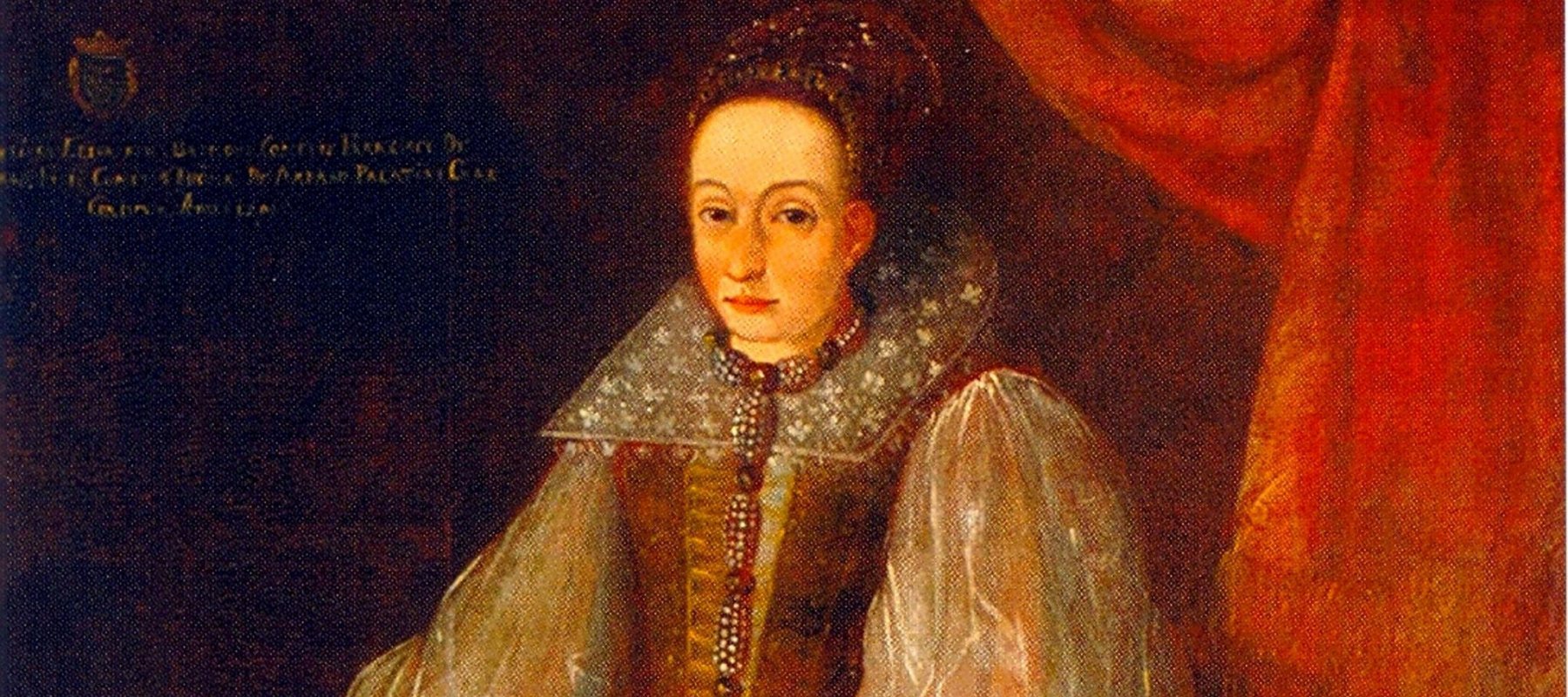

:max_bytes(150000):strip_icc()/anne-bonny-559573471-5bcf9724c9e77c0051cf5840.jpg)
:quality(75)/cloudfront-us-east-1.images.arcpublishing.com/elcomercio/Z4JHQMAFJJHIDKHFIBQ3E7BR7E.jpg)